
Artefacts
Mythbuster:
A valuable artefact is one that is worth a lot of money.
FALSE!
The price of an artefact is of no interest to an archaeologist for two reasons.
Firstly, anything an archaeologist finds in a country where they were not born, belongs to the people of the country and cannot be sold.
Secondly, the definition of a valuable object for an archaeologist, is one that can give us the most information about the past people or information not known before.
What do you think this pot could tell us about the Maya culture?
Page Content
Artefacts
Artefacts are objects made by people in the past that archaeologists find and study.

An example of an artefact, a chert knife, which Dr Diane uncovered.
Artefacts made from organic materials—anything that was once alive, like human, animal, or plant remains—are affected by air and humidity and decay quickly. This includes objects made of leather, textiles, baskets, or wood.
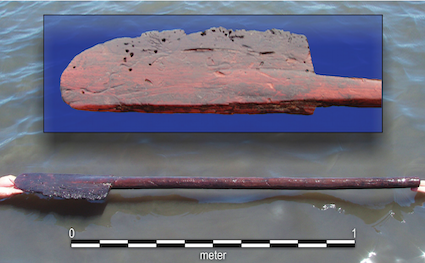
A rare find – a Maya wooden paddle from Paynes Creek National Park, Belize
Inorganic artefacts—things that were never alive, like stone, clay, and metal—last much longer than organic materials. For example, archaeologists have found stone tools that are 2.5 million years old!
These objects are the main evidence we have for the earliest part of human prehistory, even though people probably used wooden or bone tools just as often.
Pottery is another incredibly important type of artefact. Its durability, variety of shapes, and decorative possibilities make it one of the most studied and useful objects for archaeologists.

Pots are shaped or moulded from clay and then fired to make them hard and long-lasting. Clay can also be used to make figurines, musical instruments, and many other items.

An example of a clay flute in the Museum at Casa Santo Domingo, Antigua, Guatemala
Archaeological evidence throughout the world indicates that pottery originated with humanity’s first attempts at settled life. When we see people settling down, building permanent homes and farming we find pottery, why do you think that is?
Pottery was and still used to transport, cook, and store a wide range of foods, liquids, and other supplies. But as societies became more complex, pottery also had other uses, including such ritual uses as burial urns and incense burners.


The first Maya artefact Dr Diane uncovered, a 2000 year old bowl inside the room of a noble’s house.
Metallurgy is the complex technology used to extract metal from ores and produce metal artefacts, for example weapons, items of jewellery or ornaments.
The earliest examples of this technology are found in South West Asia, where between 8000 and 9500 years ago, people began to shape copper into simple tools and ornaments.
Metal technology originated in the prehistoric exploitation of three hard metals, copper, tin and iron and to a lesser degree of two rare or precious metals, silver and gold.
Children’s Activities

Jade knife, Year 6, Holy Family School, Liverpool
Looking at Artefacts
This is a great activity to introduce children to the discipline of archaeology as well as beginning a particular topic in history. It is a hands-on activity, with children looking critically at objects from an archaeological point of view.
You can use everyday items, such as any ornaments you may have, old coins, fabrics with interesting designs on them, wood, glass or metal as well as stone tools, seeds, snail shells etc. If you are covering a particular topic in history you can use objects that existed during that time period.
- Divide the class into small groups and give each group one artefact.
- Ask the groups to describe their object without saying what it is. They can talk about its size, colour, shape, texture, and any other details they notice.
- Encourage each group to use their knowledge and imagination to answer these questions: What do you think this object is, or what might it have been used for? What does it tell you about the people who made or used it? Can you guess anything about their lives, like what they ate, what clothes they wore, or how they lived?
Choose one person from each group to present their ideas to the rest of the class.
Discuss as a class:
Which objects do you think would survive a long time buried in the ground?
Which objects would probably decay or disappear before archaeologists could find them.
Rubbish Bin Activity
This activity involves children looking at modern rubbish to learn about how people today live (their behaviour) in the same way as archaeologists use ancient rubbish (middens) to understand how people lived in the past.
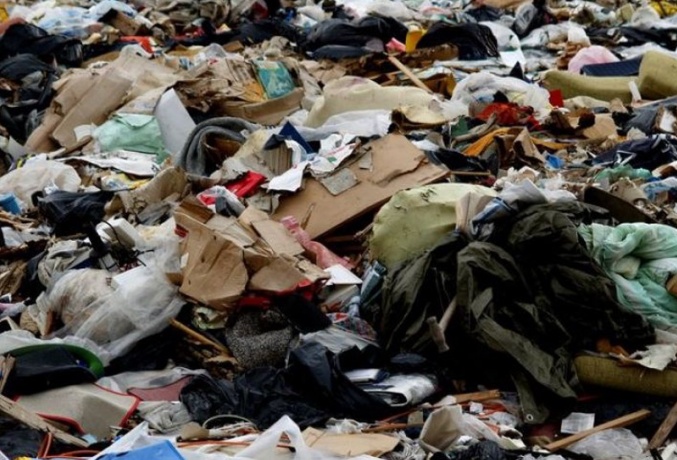
The activity helps children understand the fundamental difference between observations; that is what we see, and interpretations; the stories we tell. It also involves teamwork – showing how we can work together to solve problems.
Materials
Using recycled materials, either from rubbish bins in your school, your home or even the children’s homes (with parental consent), of course avoiding anything unsafe or unsavoury. You can be selective in what you use to suit what you want the children to learn from the questions below.
- Tell the class that archaeologists find going through ancient people’s rubbish very useful. Ask them why we would do this? Think about their own rubbish – what can their own rubbish tell people about their diet or things they enjoy doing?
- Divide the class into groups and give each group a bag of rubbish.
- Ask them to sort the rubbish into groups, that is all food stuff can go in one pile, newspapers in another and so on.
4. Choose from the questions below, ones that work best with the rubbish you have collected:
- How many people do they think this belonged to?
- Are they male or female?
- Adults or children?
- What sort of diet do they have?
- Are they healthy?
- Any clues to the job?
- Any clues to hobbies they may have? Can they tell which room this bin was sitting in – kitchen, study, bathroom, bedroom? What might be missing from the rubbish and why?
- How old is rubbish – how long has it been sitting for?
- Choose one person from each group to present the answers to the rest of the class. They need to explain why they have come to these conclusions, for example why they think that the person enjoyed going to the cinema (a cinema stub was found in the rubbish).
5. Compare their answers to the reality, what was correct, what were they mistaken about?
6. For the questions they couldn’t answer ask each group what they would need to find in the rubbish to answer the question.
7. Finally, ask the children how useful they think it is going through someone’s rubbish bin to get an idea of how they lived.
Artefact Resources by Dr Diane
A Visit from Dr Diane to your school
Through videos, sounds, images, and her own experiences, Dr Diane shows how archaeologists uncover the past from the objects they find. She shares some of her exciting discoveries, like excavating the earliest Maya murals, and gives a glimpse of what it’s really like to work in the rainforest surrounded by wildlife. Children will also explore the amazing achievements of the Maya in architecture, art, maths, astronomy, the calendar, writing, and even chocolate!
To make it hands-on, the children will take part in a history detective challenge, examining a wide range of artefacts and learning how these objects help us understand the lives of people in the past.

A Virtual Visit
A virtual visit from Dr Diane to your school! Examine artefacts and try your hand at being an archaeologist from your classroom.
Alternatively…
You can carry out a history detective challenge with your class using images of Maya artefacts complete with questions and answers.


