
Who Owns the Past?
Ancient monuments are some of the most impressive buildings ever created. In this section, you will discover how and why people in the past built huge structures like pyramids and temples, what these monuments tell us about ancient civilisations, and why they still matter today.
You will also explore important questions about who owns ancient objects and whether they should be returned to where they came from.

Page Content
Ancient Monuments
Ancient monuments often dazzle us, be it their sheer size, grandeur or age. As archaeologists, we often notice that cultures which built huge pyramids, temples, standing stones or tombs were usually very well organised and highly skilled.
These enormous buildings are called monumental architecture. They are often, though not always, a sign of a civilisation. A civilisation is a society that has cities, rulers, laws, different social groups, and control over a wide area of land. Building monuments on such a large scale shows that people were able to plan carefully, work together and organise thousands of workers.
To construct these buildings, a huge workforce was needed. Not just builders, but also artists, cooks, accountants and people to organise the work. Many ancient monuments were built using only simple tools. Some cultures had no metal tools, no wheels and no animals to carry heavy loads. The ancient Maya are a good example of this.
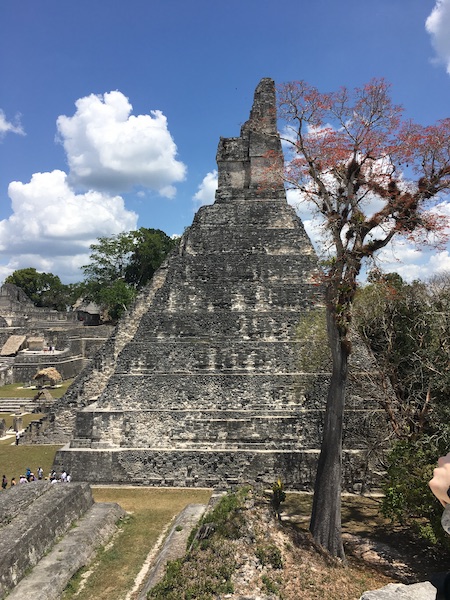
Temple 1, from the Maya site of Tikal, Guatemala
One famous example is the Parthenon in Greece. It was built during one of the greatest periods in ancient Greek history. Construction began in 447 BC and took nine years to complete, with another six years spent decorating it. The building was made of marble and measured nearly 31 metres by 70 metres, showing great skill and careful planning.

The Parthenon, Athens, Greece
Another example comes from ancient Egypt. During the Fourth Dynasty, three pharaohs built enormous pyramids within just eighty years. These rulers were father, son and grandson. The largest pyramid was built for Khufu and was originally almost 147 metres tall. Apart from the tunnels and chambers inside, it was made entirely of solid limestone.
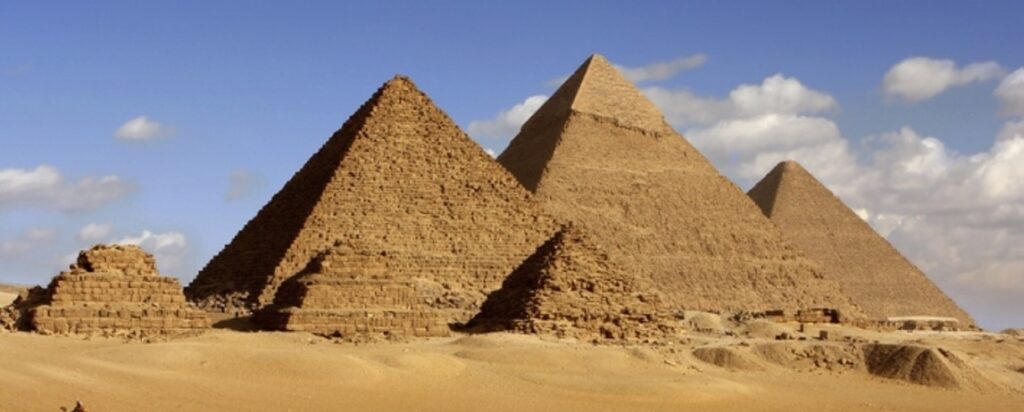
The Pyramids of Giza in Egypt
The Great Pyramid used around 2.3 million stone blocks, each weighing about the same as a small car. All of this was achieved without the wheel, pulleys or iron tools. These incredible achievements show just how powerful and organised the pharaohs were, and how skilled the people of ancient Egypt must have been.
Monuments like these are not just impressive to look at. They help archaeologists understand how ancient societies worked, how they were organised, and what they valued most.
Interesting Fact
People often imagine that slaves were forced to build famous monuments, such as the pyramids in Egypt. However, archaeologists now believe that this is not usually true. Instead, ordinary people worked on these buildings as a form of tax. Rather than paying money, they gave their time and labour, often working when they were not needed at home.
Who Owns the Past?
Archaeology is not just about the past. It is also about the present. When archaeologists dig things up, they use what they know from their own lives and culture to help them understand what they find. This means different people can sometimes tell different stories about the same discovery.
So there can be more than one way to understand the past.
For many people, ancient remains are still part of everyday life. Some monuments are even described as living monuments. A good example is Stonehenge. It is over 5,000 years old, yet people still visit it, celebrate there, and feel connected to it today, just as people did long ago.
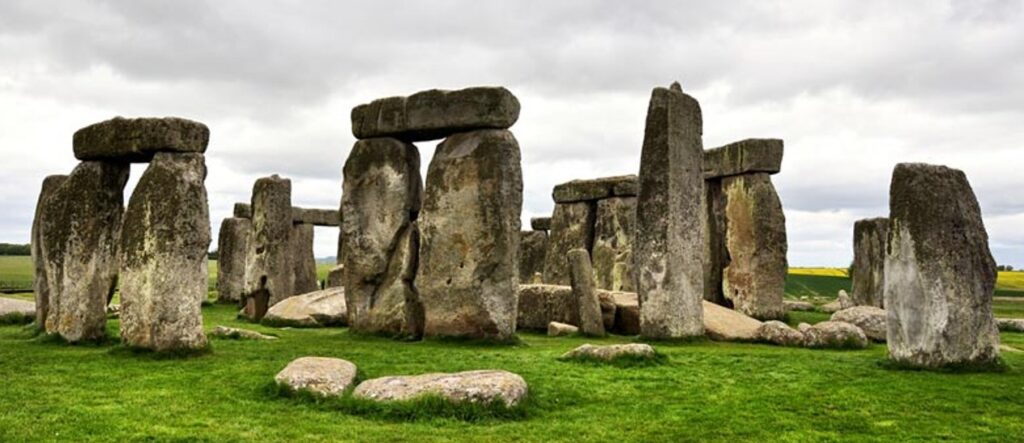
Stonehenge, UK
Ancient people were often interested in the past too. The Romans, for example, collected objects from places they conquered and displayed them in their homes. They liked showing off artefacts from other cultures.
However, this interest in the past can cause problems. Today, many artefacts found in people’s homes or sold online come from places that have been looted. This means objects were stolen from the ground. Archaeologists care less about the object itself and more about where it was found and what was found with it. When artefacts are stolen, important information about ancient people is lost forever.

An example of a looted room that Dr Diane uncovered
There are also arguments about museums displaying artefacts from other countries. Some objects were taken during wars or when countries were ruled by others.
A famous example is the Elgin Marbles, which are kept in the British Museum. Greece has asked for them to be returned to the Parthenon, where they were originally part of the building.
What do you think? Should they be returned, or should they stay where they are?
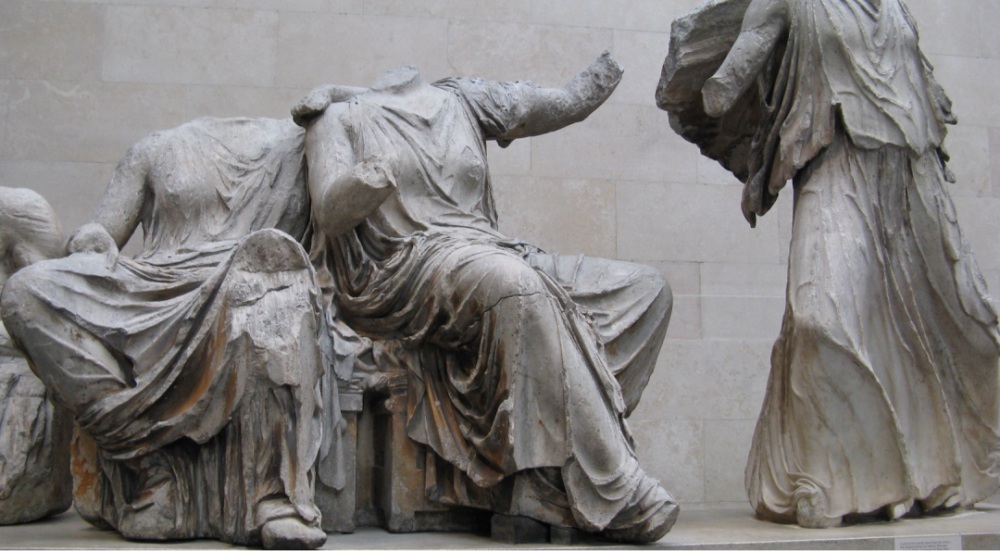
Examples of the Elgin Marbles in the British Museum
So who owns the past? Do archaeologists and historians? Governments? Museums? Or everyone?
If everyone owns the past, then everyone can have an opinion about it.
But this can also lead to ideas that are not based on evidence, such as stories about aliens building pyramids. These ideas can take away from the amazing achievements of ancient people themselves.

Actual headlines from newspapers (Feder, 2008, Fig.1.1.)
Because of all these questions, archaeologists are always thinking carefully about what they do. The past belongs to people who lived long ago, but it also matters to us today.
What do you think? Who should look after the past?
Children’s Activities
The Elgin Marbles
The question of who should own and look after ancient objects is a very important one today. It is discussed not only by archaeologists, but also by politicians and the public. This topic has been debated for many years and continues to be a “hot” issue.
A well-known example is the Elgin Marbles, which are displayed in the British Museum. These sculptures originally came from the Parthenon in Athens.

Between 1801 and 1805, Lord Elgin, who was the British ambassador to the Ottoman Empire (which ruled Greece at the time), was given permission to remove around half of the remaining sculptures. The British Museum later bought the marbles in 1816. Today, Greece is asking for them to be returned.
Materials
Elgin Marbles activity sheet:

Discussion Questions
Ask pupils to think about and discuss the following:
- Do artefacts belong to the country that made them, or to everyone?
- Should artefacts only be displayed in the country they come from, or should they be shown in museums around the world so more people can see them?
Research Task
- Introduce the Elgin Marbles and explain their history in simple terms.
- Ask pupils to carry out some basic research on the Elgin Marbles using age-appropriate sources.
Class Discussion
- Use the activity sheet and pupils’ research to explore:
- Why Greece wants the sculptures returned
- Why the British Museum believes they should remain in London
Debate Activity
- Divide the class into two groups:
- One group argues for the return of the sculptures
- The other group argues against their return
- Appoint a pupil or the teacher to act as the judge.
Written Reflection
- Ask pupils to write:
- Reasons for returning the marbles
- Reasons for keeping them where they are
- Their own personal opinion, with an explanation