
Butterflies and Bees
The Maya rainforest is home to an incredible variety of butterflies, each adding flashes of colour to the forest. It’s also known for the remarkable stingless bee — a special kind of bee that makes honey without the sting!
Malachite Butterfly
The Malachite butterfly is one of the most eye-catching butterflies in the tropical rainforest. Its wings are a striking mix of bright lime green and chocolate brown, which help it blend in among the leaves and dappled sunlight of the forest.

Despite their delicate appearance, these butterflies are strong fliers. They love feeding on rotting fruit, tree sap, and nectar from rainforest flowers. The name “Malachite” comes from the green gemstone it resembles.
Two malachite butterflies resting gently on Dr Diane’s hand, they are very friendly!
Blue Morpho
If you spot a flash of brilliant blue fluttering through the rainforest, you’ve probably just seen a Menelaus Blue Morpho butterfly.

You can see these at the Butterfly Farm in Stratford-upon-Avon
These butterflies are famous for their dazzling wings, which shine bright blue in the sunlight. But here’s a secret: their wings aren’t really blue at all! Tiny scales on their wings reflect light in a special way that makes them look that colour. When their wings are closed, they’re brown and spotty, helping them hide from hungry birds.
Brown Morphos showing a flash of blue, taken by Dr Diane at Fallen Stones, Butterfly farm, Belize
Owl Butterfly
Owl butterflies are some of the largest butterflies in the Maya rainforest, with wings that can grow up to 20 centimetres across! They get their name from the huge eye-like spots on their wings, which look just like the eyes of an owl.
These markings help to scare away predators such as birds and lizards, who mistake them for a much larger animal.
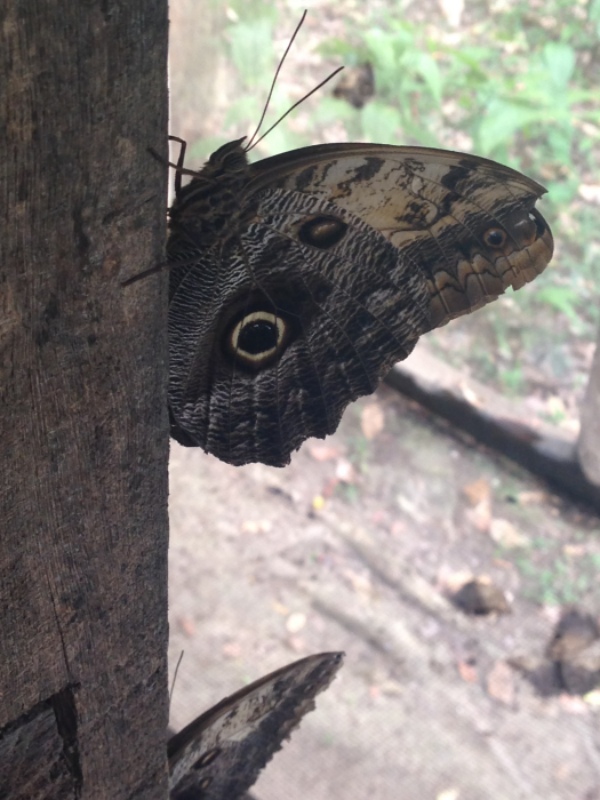
Owl butterflies are usually active at dusk, gliding slowly through the forest edges and clearings.
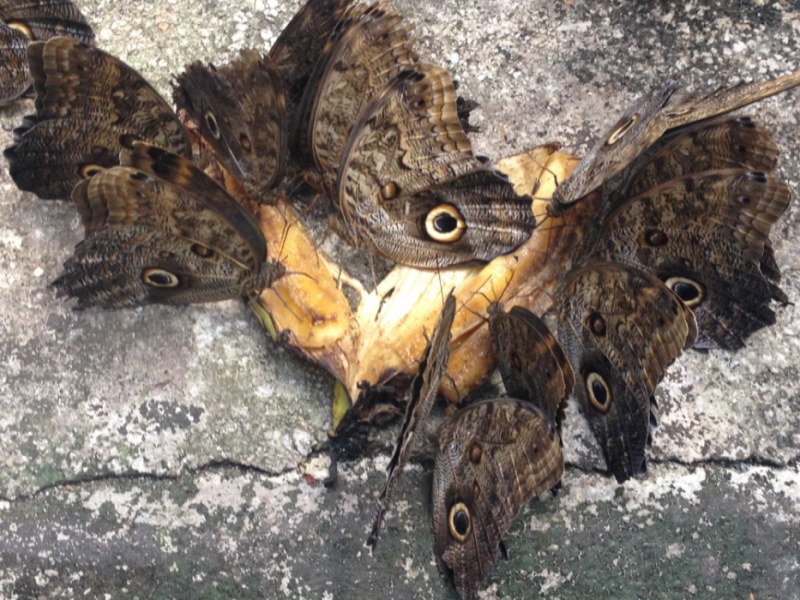
They feed on the juices of rotting fruit rather than nectar, helping to recycle nutrients back into the rainforest ecosystem.
With their impressive size and clever disguise, owl butterflies show just how amazing rainforest adaptations can be!
Tiger Stripe Butterfly (Swallowtail)
Tiger-stripe butterflies are easy to spot in the rainforest thanks to their bright yellow or orange wings covered in bold black stripes—just like a tiger! These striking patterns aren’t just for show; they act as a warning to predators that the butterfly doesn’t taste very nice.
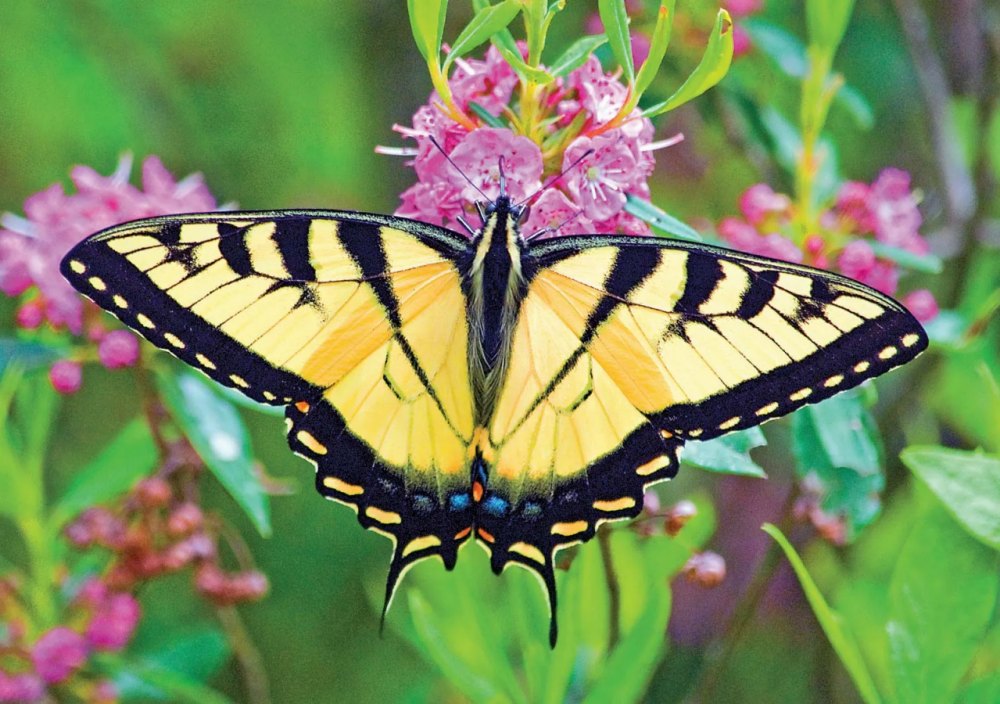
Many tiger-stripe species, such as the tiger longwing, are part of a clever survival trick called mimicry, where different butterflies share similar colours to remind birds and lizards to leave them alone.
These butterflies play an important role in pollination, helping rainforest plants to reproduce.
From Muncher to Marvel: Life Before the Butterfly
Listen to the caterpillar munching away in preparation for its transformation into a beautiful butterfly!
This hungry caterpillar is busy munching on rainforest leaves, storing up energy for the amazing change ahead. Soon, it will spin itself into a cocoon, where it will transform into a beautiful butterfly. This incredible process is called metamorphosis.
Stingless Bee (Melipona)
The stingless bee may be small, but it’s one of the rainforest’s most fascinating insects. Found throughout the Maya rainforest, these gentle bees live and work together in large colonies, just like the honeybees we know at home — but with one big difference: they don’t sting! Instead, they defend their nests by biting or releasing sticky resin to trap intruders.
Stingless bees are expert builders. They create their hives inside hollow trees, old logs, or even underground, using wax and plant resin to make smooth, shiny tunnels and chambers. Inside, the bees store honey, pollen, and brood (developing young). Their honey has a thinner texture and tangier taste than regular honey.
They’re very important for the rainforest too — buzzing from flower to flower, helping plants grow by carrying pollen.
The Ancient Maya
The ancient Maya people domesticated stingless bees, keeping and raising them much like farm animals. They housed these bees in hollow logs to collect their delicious honey, which was used for food, medicine, and special ceremonies.
Pictures of queen bees, worker bees, and bee gods can be seen in ancient Maya paper books called codices, showing how important these insects were in Maya culture.

This image from the Madrid Codex shows how the Maya cared for their stingless bees, collected honey, and took part in ceremonies related to beekeeping.
To begin a new hive, a piece of a living hive was placed inside a hollow log, acting as the seed for a new colony. The bees then built around the old nest, while the ends of the log were sealed with clay plugs or stones. A small hole was carved in the side to serve as an entrance for the bees. When it was time to collect honey, the family could simply unplug one end of the log and scoop out the honey as needed.