
Maya History
The Maya created and sustained an incredible civilisation in a rainforest environment. They built spectacular cities, including enormous temple-pyramids, standing stones (stelae) and ballcourts without the use of metal tools, the wheel or domesticated beasts of burden. They were expert artisans producing painted murals and ceramics, as well as exquisite jewellery fashioned out of the exceptionally hard gemstone jade. The Maya were the only civilisation in the Americas to develop a complete writing system. Moreover, their precise observations of the movements of the sun, moon and stars combined with their creation of zero, produced complex calendars and a level of astronomical knowledge beyond that of their contemporaries in Europe. Finally, the Maya were amongst the first people to harvest cacao beans to make delicious chocolate drinks!
Setting
The cultural area of the Maya is known by archaeologists as Mesoamerica. This term is defined by the presence of common cultural traits which includes a form of game with a rubber ball in a rectangular court, books made of sheets of bark paper or deerskin and a common diet of maize (corn), beans and squash (Kirchoff 1952). Other cultures living in Mesoamerica included inhabitants of the great city of Teotihuacan, the Olmecs, Zapotecs, Mixtecs, Toltecs and Aztecs.
Geographically, the ancient Maya lived in what is today Central America and Mexico, in particular, the countries of Guatemala, Belize, the western portions of Honduras and El Salvador and the Yucatán Peninsula, Chiapas and Tabasco in Mexico (Figure 1). This region was geographically diverse, including the rich southern Pacific coastal plains, the high fertile basins of the volcanic highlands of southern Guatemala and central Chiapas and the lowland rainforest (more accurately a humid subtropical forest) region of northern Guatemala, Belize and the Yucatán Peninsula. The area is bounded by the Caribbean Sea, the Gulf of Mexico and the Pacific Ocean.

Figure 1: Map of the Maya area (modifications made by Simon Burchell, ITMB Publishing 1998. Wikimedia commons).
Chronology
Palaeoindian ~ 10,000-8000 BC
Archaic 8000-2000 BC
Preclassic: 2000 BC to AD 250
Classic: AD 250 to 900
Postclassic: AD 900 to 1524/1542
Colonial period: AD 1524/1542 to 1821
Preclassic: 2000 BC to AD 250
The Preclassic period was traditionally seen by archaeologists as a time when the Maya culture was emerging. Villages and towns existed, but cities and state-level society were seen to arise later during the aptly named Classic period. However, excavations at the site of El Mirador and San Bartolo, amongst others, have overturned this idea. It is now agreed that it is during the Preclassic period where we see the characteristics of Maya culture fully emerge. This includes the move from village settlements to cities, differential access to power and wealth, public-ceremonial buildings, monumental art, writing and a painting (mural) tradition. It is in the rainforest region (particularly the Petén, Guatemala), where we see the rise of Maya civilisation.
Notable examples of Preclassic sites are El Mirador, San Bartolo, Uaxactún and Kaminaljuyu in Guatemala, Cuello and Lamanai in Belize and Komchen in the Yucatán Peninsula, Mexico.
El Mirador, Guatemala
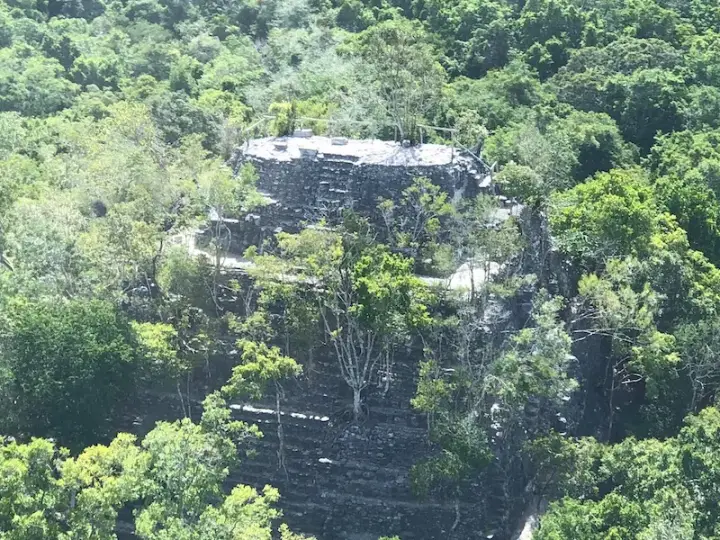
Figure 2: La Danta Pyramid, El Mirador, Guatemala (photograph by the author).
El Mirador is one of the oldest and largest Maya cities ever built. In 300 BC the city covered over 1550 hectares (3840 acres) with a population of close to 100,000 people (Hansen 2001). The site included two massive pyramid complexes set a mile apart; El Tigre included a 55 m high temple and La Danta; a 70 m high temple (Figure 2), being one of the largest pyramids in the world. The site was connected to other towns by extensive road systems.
San Bartolo, Guatemala
The archaeological site of San Bartolo is famous for its murals, the earliest found in the Maya area (100 BC), which depict themes of Maya creation and kingship. In the mural itself a text containing the glyph AJAW meaning lord or ruler was found next to a scene portraying an individual being crowned. In addition, the earliest evidence of hieroglyphic writing (300 BC), was discovered within the Pyramide de las Pinturas (Pyramid of the Paintings) (Saturno et al. 2006).
Uaxactún, Guatemala
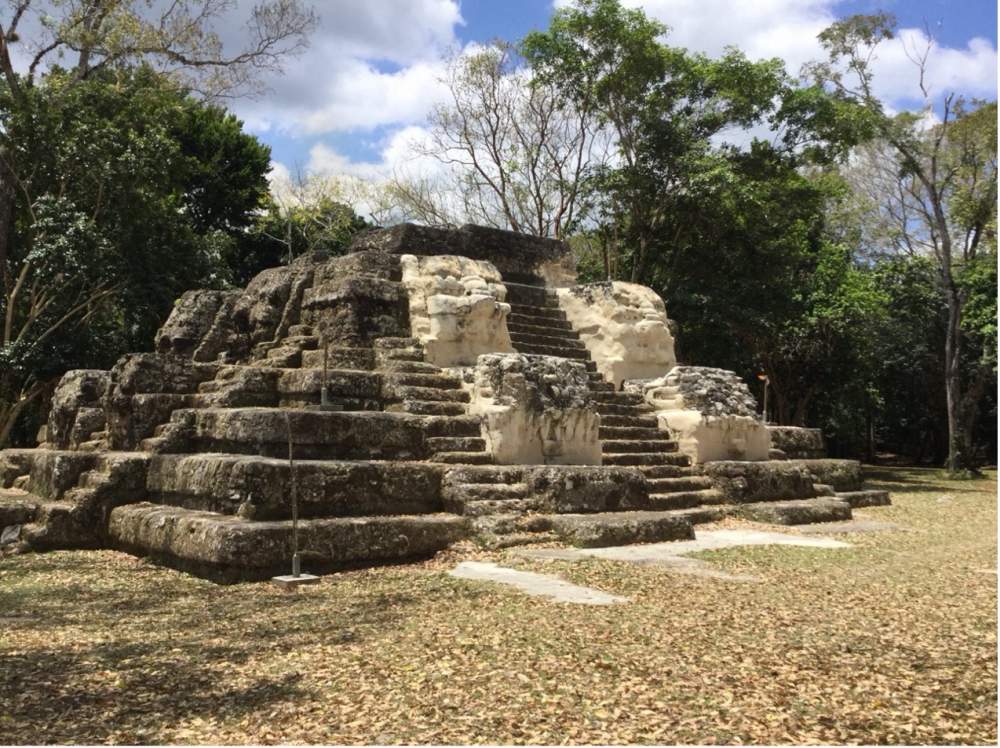
Figure 3: Structure E-VII-sub, Uaxactún, Guatemala (photograph by author).
Excavations within Group E of the site of Uaxactún (Figure 3) (pronounced Wa-shuk-toon)revealed a large pyramid with stairways on each side to the west and to the east, three smaller structures which together may have functioned as an astronomical observatory (Ricketson and Ricketson 1937). When standing on the stairway of the main pyramid at certain times of the year, such as the summer solstice, the sun would be seen rising behind the smaller temples. Further E-Groups have been found at other Maya sites. However, it should be noted that recent excavations at the site question this assumption, stating that these groups though astronomically functional, did not play a prominent role in astronomical observations (Šprajc 2021).
Classic Period: AD 250 to 900
The Maya never built an empire, rather their political system has been compared to the ancient Greek city-states. There were several kings ruling over different areas of land, and they fought against each other for tribute. The king was all powerful, divine and was often the head priest. The upper class consisted of the extended royal household and nobles. The lower class were famers. During the Classic Period we see population increase and the rise of cities as well as the appearance of polychrome (painted in more than two colours) pottery. There were four major centres which influenced the rest of the Maya area during the Classic period.
Tikal, Guatemala
Tikal was the archetypal Maya city. It was occupied in the Preclassic period and by the Late Classic become a city of over 60,000 people. Tikal had several large pyramids, one, the Temple of the Great Jaguar, was 47 m high and housed the tomb of King Jasaw Chan K’awiil I (Figure 4). The king is also known as Ah Cacao (the chocolate ruler) and ruled from AD 682-734 (Martin and Grube 2000). Within his tomb the king lay on a great limestone bench, covered in jaguar skin, and wore jade jewellery. Through the rule of King Jasaw Chan K’awiil I, his son and grandson, Tikal became a leading capital in the Maya lowlands.

Figure 4: Ceremonial Centre at Tikal, Guatemala (photograph by author).
Copán, Honduras
The city of Copán is famous for its hieroglyphic stairway; 2,200 glyphs naming the city’s rulers; the longest text in the Maya world (Figure 5). The founder of Copán was K’inich Yax K’uk Mo’ (Great Sun First Quetzal Macaw), who accessed the throne in AD 426 (Fash 1991). His tomb (Hunal tomb) has been excavated, and his skeleton showed evidence of several injuries most likely from battle wounds, including a broken right arm. His son, Popol Hol, built the Margarita temple as a memorial shrine and an entwined quetzal and scarlet macaw bird (his father’s name) are emblazoned in stucco on the outside.
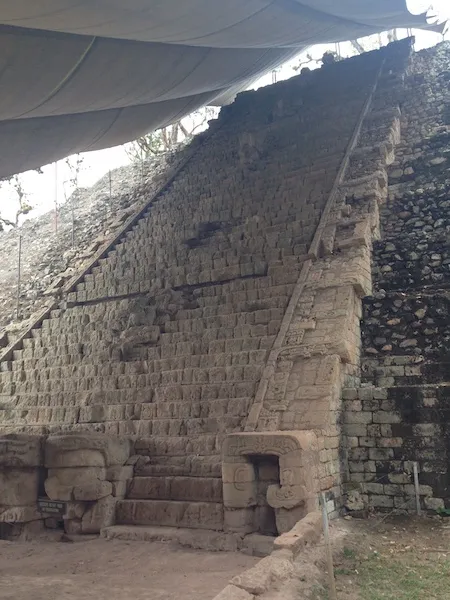
Figure 5: Hieroglyphic Stairway, Copán, Honduras (photograph by author).
Calakmul, Mexico
Calakmul is known as the later seat of power of the ‘Snake Kingdom’ (Kaan). The city extended over 7050 acres (2850 hectares) and over 6,000 buildings have been mapped (Martin and Grube 2000). One of its most famous rulers is Yuknoon the Great who reigned from AD 636-686. Events of his reign were detailed in at least 18 stelae erected around the city and many of the city’s temples and palaces were built during his reign.
Palenque, Mexico
The city of Palenque in Chiapas is famous for the discovery of the tomb of Pakal, one of the greatest Maya rulers. He became king when he was only 12 years old in AD 615 and ruled for 68 years (Stuart and Stuart 2008).
Pakal initiated a great construction programme and restored the city as a regional power. His tomb was found in the Temple of Inscriptions by a Mexican archaeologist, Alberto Ruiz in 1952 (Figure 6). The tomb was hidden within the depths of the temple, through a trap door and down a flight of steps that lead to the room that encased the find. The limestone sarcophagus weighed 20 tons, and its lid displayed a spectacular drawing of the king descending into the underworld only to rise to the heavens to be reborn as a god. Pakal was resplendent in jade jewellery and wore a jade death mask.

Figure 6: Temple of Inscriptions, Palenque, Mexico (photograph by author).
Postclassic: AD 900 to 1524
Around AD 900 the Maya world went through a transitional period, we see a change in the location of Maya cities, art and architecture styles, as well as the political system. The influence of ideas from central Mexico is quite clear at this time.
A catalyst for this change is the so called “Maya collapse”. In the southern lowlands there appeared to have been a general slowdown in construction and erection of monuments, a lack of hieroglyphic texts and long-distance trade contacts ended. A myriad of different explanations have been given for this transition from soil depletion and deforestation to population pressure and warfare, to earthquakes and hurricanes. However, recent evidence from sediment cores in Lake Chichancanab, Mexico, have shown that there was an extensive drought at this time (Hodell et al. 2005).
Chichén Itzá, Mexico

Figure 7: El Castillo, Chichén Itzá, Mexico (photograph by author).
Chichén Itzá, in the Yucatán Peninsula, is often used as the stereotypical Maya site and el Castillo pyramid is the default image for resources on the Maya (Figure 7). However, this city was inhabited during a time of external influence from Mexico and displays a mix of Maya and non-Maya styles, in particular from the site of Tula, Hidalgo (Kowalski et al. 2011). Unprecedented Maya architecture and sculpture such as Chichén Itzá’s colonnaded halls (the Temple of the Warriors,) atlantean columns (stone columns depicting warriors in low relief), tzompanti (a stone version of racks displaying actual skulls of captives), chacmools (reclining stone figures supporting a bowl on their chests for sacrificial offerings), and reliefs depicting lines of warriors or eagles and jaguars with human heads, were all seen earlier at Tula. Finally, the caracol, a distinctive round structure, was similar to the round temples found in Central Mexico, which were associated with Ehecatl, the Central Mexican wind-deity. Chichén Itzá then should not be used as an example of a typical Maya city.
Mayapán, Mexico
Mayapán in the Yucatán Peninsula (AD 1200 to 1450) is another example of a Postclassic city, which rose to prominence after the demise of Chichén Itzá. The city parallels Chichén Itzá in its architectural style, having a similar el castillo pyramid (Temple of Kukulkan),and a round temple, but unlike Chichén Itzá was entirely walled for military defence (Masson and Lope 2014). The city was a major commercial centre where merchants traded salt, honey, pottery, cotton textiles, obsidian and jade.
Colonial period: AD 1524/1542 onwards
The Spanish conquest of the Aztecs was relatively quick (1519-1521) and confined to the Valley of Mexico. In respect to the Maya, the Spanish had a much larger region to contend with and the Maya held out against the Spanish until AD 1697. The Spanish inadvertently brought diseases such as smallpox with them, which the Maya had not been exposed to and had no immunity against, and so many died from disease rather than at the hands of the Spanish themselves.
The Yucatán Peninsula was the earliest place of contact with the arrival of Columbus in 1502. In 1517 Francisco Cordoba sailed from Cuba reaching the peninsula looking for slaves. Later in 1527 we see Francisco de Montejo setting off to conquer Yucatán, but it wasn’t until 1541 when his son took Campeche. By the 1550’s Yucatán was a large slave colony.
Franciscan missionaries in Yucatán tried to convert the Maya by force to Christianity, the most notorious being Friar Diego de Landa. He arrived in the area in 1549 torturing and killing many Maya, as well as burning their codices (paper books). Indeed, the Spanish conquistadors complained about his cruelty to the King of Spain, Charles V, and he subsequently was arrested and jailed. Whilst in jail he wrote the infamous book ‘Yucatán before and after the Conquest’ (1941). The ethnography records Yucatec Maya culture at that time and information he could glean from Maya informants concerning religion, daily life and writing.
In 1524, Pedro de Alvarado was sent by Hernán Cortés to conquer the Guatemalan Highlands. The two largest Mayan language groups, the Quiché and Kakchikel met with the Spanish and swore allegiance to the Spanish crown. However, both their capitals Utatlán and Iximche (Figure 8) respectively, were destroyed by the Spanish and by 1542 the Guatemalan highlands was under Spanish control.

Figure 8: Site of Iximche, Guatemala (photograph by author).
Pedro de Alvarado then had taken Guatemala and Francisco de Montejo, Yucatán, which left the Petén, the birthplace of Maya civilisation. The Itzá were the main group living there and fought against the Spanish for over 150 years. However, their capital city Nojpeten was destroyed in AD 1697.
Encomiendas (called haciendas in the Yucatán Peninsula), were granted to the Spanish conquistadors in gratitude for their service to the Spanish crown. However, it was not just the land that was given, but the people living there in the form of labour. Hence the Maya became slaves. The Maya tried to resist this, the most prominent revolt being the failed Caste War (1847-1901) (Reed, 2002). In the 20th century governments took on the policy of forced integration of Maya into the nation as “citizens”, but with no respect to their distinct ethnic origins.
The Maya Today
Many of the ancient Maya suffered at the hands of the Spanish in the 16th century as they conquered their land, burnt their books and brought disease and death in their wake. Fortunately, there are descendants of the ancient Maya, around 8 million, living today in the same area. Nearly half of the population of Guatemala are Maya (4.5 million). What is special about the Maya today is that we see continuity between the past and present. Many speak similar languages (28 are still spoken today), use the ancient sacred calendar (Tzolkin), and wear traditional dress.
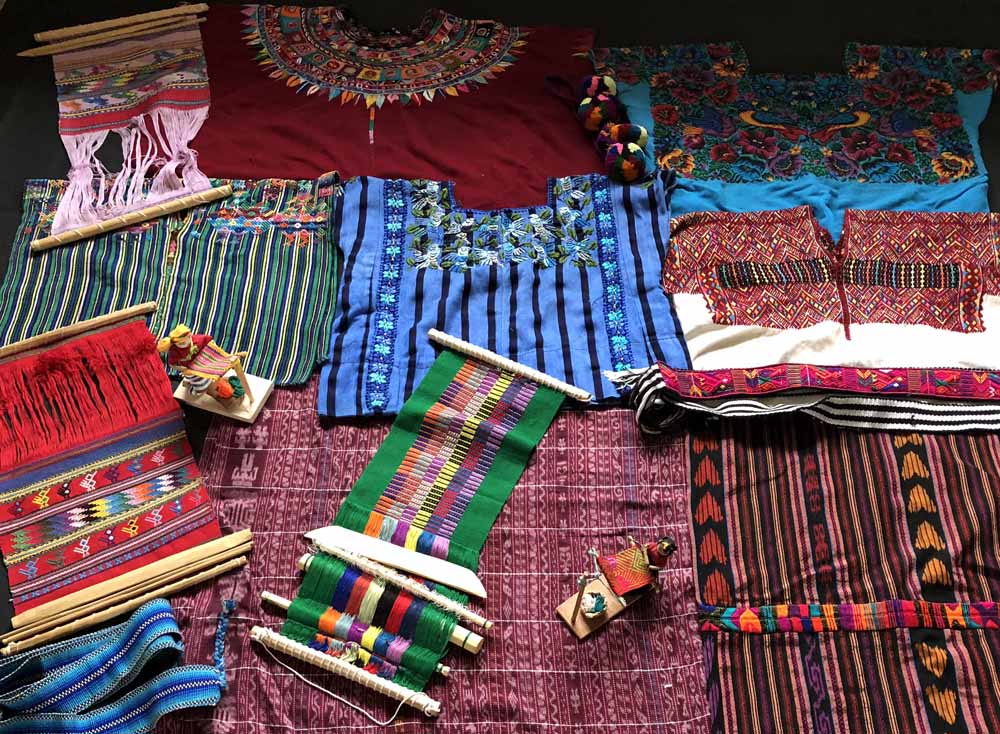
Figure 9: Example of huipiles and miniature backstrap looms (photograph by author).
Maya women traditionally wear a blouse, called a huipil (Figure 9) made of cotton with beautiful designs, that are distinct to the community they are from, and which act as a form of identity. Huipiles were also worn by ancient Maya women. Women also wear a cotton skirt (corte) and often a coloured cotton ribbon in their hair (cinta). Traditional dress for men is white trousers with white or blue shirts and sandals (Figure 10), but these generally are worn only by the elders. Spinning and weaving are important parts of daily life for Maya women, and they use backstrap looms. In a backstrap loom the warp (threads running lengthwise) is stretched out between two sticks, one of which is attached to a post or a tree, while the other one is strapped to the weaver’s back. Each community has its own customs (costumbres), which include specialists called day keepers, Maya priests with powers of divination. They keep and honour the days of the Tzolkin calendar. People approach day keepers with questions about what days are auspicious or how to cure illnesses. Day keepers ask the spirits of the days for guidance (Tedlock, 1982).

Figure 10. Examples of traditional attire worn by men and a tumpline (top centre) (photograph by author).
The Maya have been discriminated against by the Guatemalan government and have struggled to gain equal rights. Land issues, economics, political participation and cultural survival are at the forefront of their concerns. Rigoberta Menchú, wrote about their troubles in her book ‘I, Rigoberta Menchú: An Indian Woman in Guatemala’ (1984). The K’iche’ woman gave an eyewitness account of the genocide of her people by the government. This “period of terror” ran from 1980-1983 and involved the burning of villages, assassinations of rural leaders, torture and indiscriminate violence, and displaced nearly half the Maya population of the highlands (Smith 1990:272). Her book helped to bring indigenous issues into the forefront and evoked widespread international interest and sympathy. She won the Noble Peace Prize in 1992 for her work in bringing the plight of the Maya people to international attention.
The creation of the Ejército Zapatista de Liberación Nacional (EZLN), more popularly known as the “Zapatistas” in 1983, was the outcome of the extreme political and economic marginalisation of Maya people in Chiapas, Mexico and included many Guatemalan refugees. On January 1, 1994, the Zapatistas seized the city of San Cristóbal de las Casas and 4 other towns in the state of Chiapas calling for “jobs, land, housing, food, health, independence, freedom, democracy, justice and peace” (Wager and Schulz 1995:2). Heavy fighting between the Zapatistas and Mexican army lasted only 12 days, but the event received much international attention. Although the Zapatistas did not win the war against the government, they did win over the people, forced indigenous rights to the national stage, encouraged other areas to revolt, and negotiated with the government for improved conditions in Chiapas (Earle 1988). Yet, the success of the movement left an indelible mark on local peoples; hundreds of Chiapans were killed as a result of the Zapatista uprising and military counterattack, and 22,000 local peasants lost their homes (Campbell 2000:60).
On 31st March 1995 the Guatemalan government signed an agreement acknowledging that the Guatemalan state was founded on discrimination against the Maya, therefore ethnic identity and civil rights were fundamental issues towards forging a harmonious society (Metz 1998:337). This agreement became part of the peace accords signed on December 29, 1996. However, in reaching this agreement at least 50,000 indigenous people were killed and 150,000-250,000 people were forced into permanent exile (Davis 1988:11).
More recently, the Guatemalan Maya Revitalization Movement, is a call for a rebirth and revaluing of Maya culture and civil society and extends its membership to all Maya peoples of Central America (Campbell 2000:55). The leaders want equal participation and cultural-specific recognition in a multi-ethnic Guatemalan society, as opposed to the state’s view of national culture, which is based solely on urban Westernised and Spanish culture. The non-violent movement is composed of various organisations working at different levels and issues, but all linked to the main concern for cultural identity. Accomplishments of the movement can be illustrated in the revitalisation of Mayan languages, the introduction of Maya schools and adult educational programs, the mobilisation of ethnic markers such as use of hieroglyphs and traditional clothing designs, and the implementation of agricultural extension programs (Fischer 1996:69).
References Cited
Campbell, Howard. 1994. Zapotec Resistance. University of New Mexico Press, Albuquerque.
Davis, Shelton H. 1988. Introduction: Sewing the Seeds of Violence. In Harvest of Violence: The Maya Indians and the Guatemalan Crisis, edited by R. M. Carmack, pp. 3-36. University of Oklahoma Press, Norman.
De Landa, Diego. 1941. Relación de las Cosas de Yucatan. Transl. William Gates. Merida: Edición Yucateca.
Earle, Duncan M. 1988. Mayas Aiding Mayas: Guatemalan Refugees in Chiapas, Mexico. In Harvest of Violence: The Maya Indians and the Guatemalan Crisis, edited by R. M. Carmack, pp. 256-273. University of Oklahoma Press, Norman.
Fash, William. 1991. Scribes, Warriors and Kings: The City of Copan and the Ancient Maya. Thames and Hudson, London.
Fischer, Edward F. 1996. Induced Culture change as a Strategy for Socioeconomic Development: The Pan-Maya Movement in Guatemala. In Maya Cultural Activism in Guatemala, edited by E. F. Fischer and R. M. Brown, pp. 51-73. University of Texas Press, Austin.
Hansen, Richard 2001. The First Cities: The Beginnings of Urbanization and State Formation in the Maya Lowlands. In Maya; Divine Kings of the Rainforest. Ed. N. Grube; 50-65. Cologne: Konemann.
Hodell, David A., Mark Brenner, Jason H. Curtis. 2005. Terminal Classic Drought in the Northern Maya Lowlands inferred from multiple sediment cores in Lake Chichancanab (Mexico). Quaternary Science Reviews 24:1413-1427.
Kirchoff, Paul 1952. Mesoamerica. In Heritage of Conquest. Ed. S. Tax; 17-30 Glencoe, IL: Free Press.
Kowalski, Jeff Karl, Dan Healan, Susan Kepacs, Ruth Krochock and Ruth McCafferty. 2011. Twin Tollans: Chichén Itzá, Tula and the Epiclassic to Early Postclassic Mesoamerican World. Harvard University Press, Cambridge.
Martin, Simon and Nikolai Grube. 2000. Chronicle of the Maya Kings and Queens. Thames and Hudson. London.
Masson, Marilyn A. And Carlos Peraza Lope. Kukulcan’s Realm: Urban Life at Ancient Mayan. 2014. University Press of Colorado. Boulder.
Menchú, Rigoberta. 1984 I, Rigoberta Menchú. Verso, London.
Metz, Brent. 1998. Without Nation, Without Community: The Growth of Maya Nationalism Among Ch’orti’s of Eastern Guatemala. Journal of Anthropological Research 54:325-349.
Ricketson Oliver, G. And E. B. Ricketson. 1937. Uaxactún, Guatemala, Group E, 1926-1937. CIW Publication 477.
Saturno, William. A., D. Stuart and B. Beltran. 2006. Early Maya Writing at San Bartolo, Guatemala. Science 311(5765):1281-1283.
Smith, Carol A. 1990. Conclusion: History and Revolution in Guatemala. In Guatemalan Indians and the State: 1540 to 1988, edited by C. A. Smith, pp. 258-287. University of Texas Press, Austin.
Šprajc, Ivan. 2021. Astronomical Aspects of Group E-type Complexes and Implications for Understanding Ancient Maya Architecture and Urban Planning. PLoS ONE 16(4):1-33.
Stuart, David and George Stuart. 2008. Palenque: Eternal City of the Maya. Thames and Hudson, London.
Tedlock, Barbara. 1982. Time and the Highland Maya. University of Mexico Press, Albuquerque.
Wagner, Stephen J and Donald E Schulz. 2003. Civil-Military Relations in Mexico: The Zapatista Revolt and Its Implications. Journal of Interamerican Studies and World Affairs 37(1):1-42.